Hello, I'm Pinkyne, a 5th-grade teacher. (After school, I also spend a lot of time with students who struggle with multiplication... 😂)
The 'Factors and Multiples' unit in 5th grade is incredibly important, as it builds the foundation for so many other areas of math, like fractions and decimals. However, I've always felt a bit disappointed seeing many students find the Greatest Common Divisor (GCD) or Least Common Multiple (LCM) by mechanically memorizing algorithms, like the upside-down division method, without deeply understanding the principle behind it. It's a unit where it's all too easy for students to move on without grasping the fundamental 'why' behind the calculations.
"How can I help my students truly digest this crucial concept?" 💡
After much thought, I found a hint in an activity my students love: playing with LEGO blocks. I tried an approach that views all natural numbers as a combination of special LEGO blocks called 'prime factors', and because it was so effective, I wanted to share it with you all.
So, imagine this! Every natural number greater than 1 is a magnificent LEGO creation. 🧱
And just like any LEGO creation, these numbers are assembled from very basic "component blocks." These blocks are special because they are the most fundamental units, unable to be broken down into a product of other blocks. These 'unbreakable, truly basic blocks' are our prime numbers (and thus, prime factors). (Think of numbers like 2, 3, 5, 7, etc.!)
Here's the truly amazing and important part! Just as every LEGO creation has its own unique instruction manual, every natural number has its own unique assembly recipe—a specific combination of these basic blocks (prime factors) multiplied together. There is only one way to build any given number! This is, in essence, the number's "blueprint." For example, the blueprint for the number 12 is two '2' blocks and one '3' block (12 = 2 x 2 x 3).
Now, let's look at the blueprint for 36.
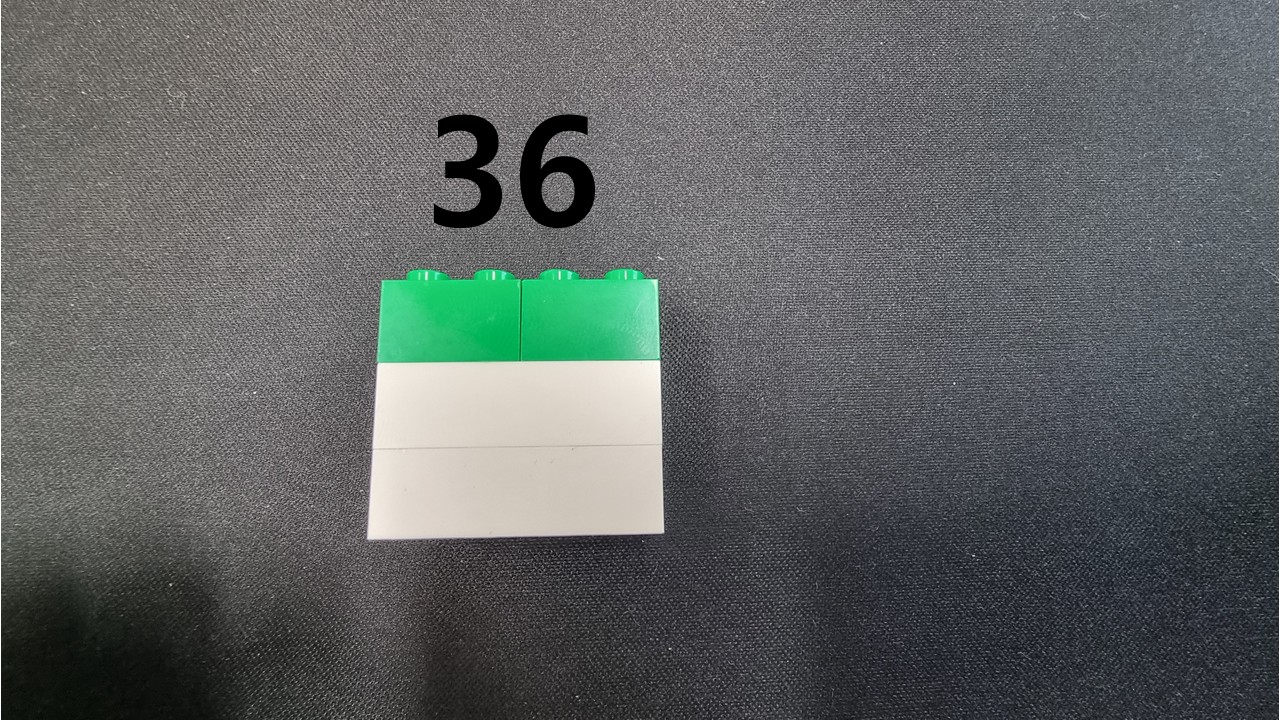
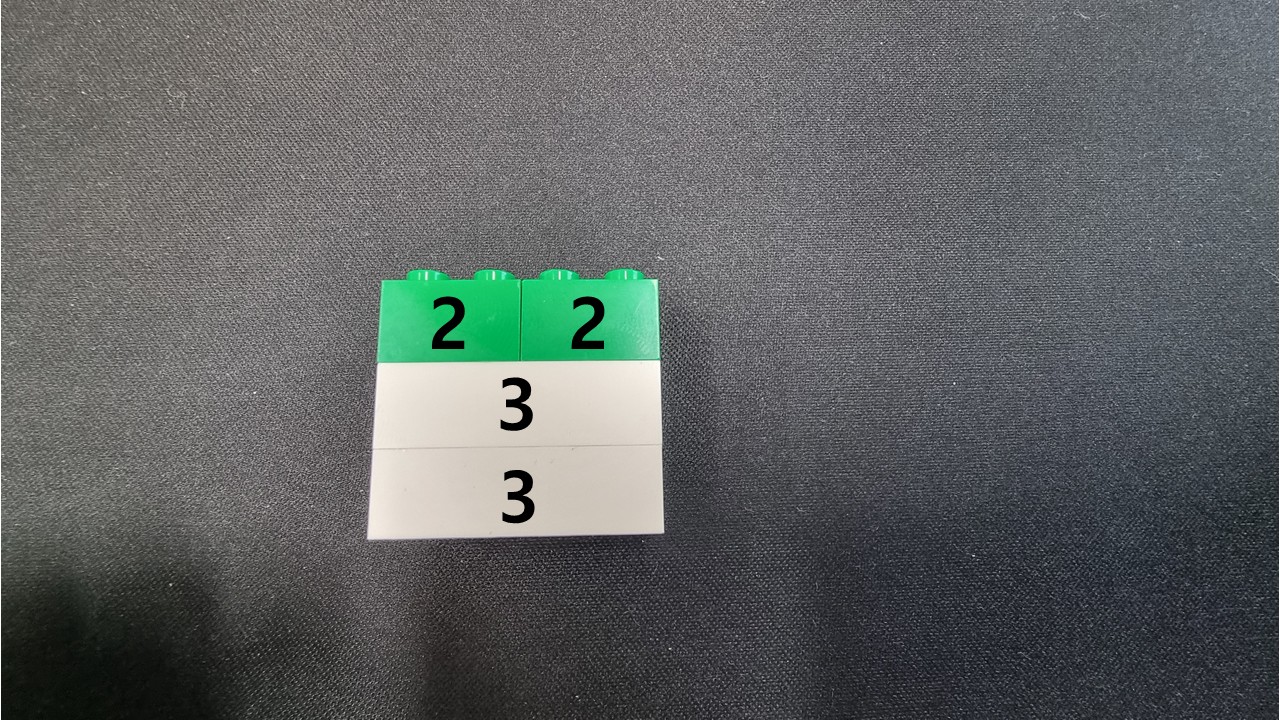
To complete the '36' creation, you need exactly two '2' blocks and two '3' blocks (36 = 2 x 2 x 3 x 3). This creation is only complete when you have these four blocks—no more, and no less.
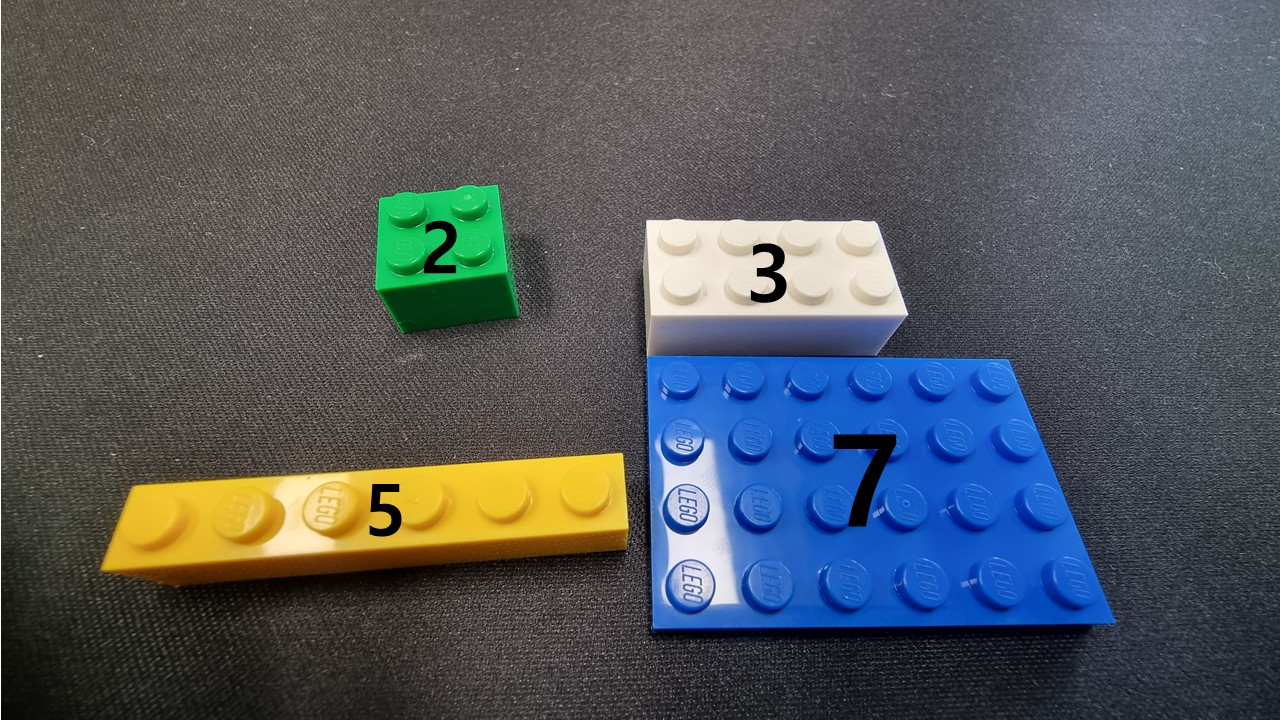
What's crucial is that only the unique types and quantities of basic blocks specified in the blueprint can be used. To make 12, we needed two '2's and one '3'; there was no room for a '5' or a '7' block. Likewise, to build 36, you need two '2's and two '3's. If you only had one '2' block, or three '3' blocks, or a random '5' block showed up, you could never build 36. You must use the exact set of blocks specified. 🚫
Why is it so important to see numbers as 'block assemblies'? ✨ Because once you understand the 'structure' of a number—which basic blocks it's made of and how many of each—concepts like factors, multiples, common factors, and common multiples become much easier and clearer! It gives students the power to 'see' the principles of numbers, rather than just memorizing a calculation method.
Now, let's put on our 'Number LEGO Block Glasses' and take a fresh look at those terms that seemed so difficult.
1. What is a Factor?
A factor is any number that can be built using only some or all of the prime factor blocks found inside a number's "dedicated box." You are absolutely forbidden from bringing in a random block that wasn't there to begin with!
- Example (36 = 2 x 2 x 3 x 3): The factors of 36 can only be made by combining the '2' blocks (up to two of them) and the '3' blocks (up to two of them) from its box. (e.g., 1 (using no blocks!), 2, 3, 4=2x2, 6=2x3, 9=3x3, 12=2x2x3, 18=2x3x3, 36=2x2x3x3). There's no way a '5' block can get in here!
2. What is a Multiple?
A multiple is a number you create by starting with all of the prime factor blocks from a number's "dedicated box" and then adding any other basic blocks (prime factors) you want. The starting point must be the complete set of the original number's blocks.
- Example (36 = 2 x 2 x 3 x 3): To be a multiple of 36, a number must contain (2 x 2 x 3 x 3) at its core. If you add another '2' block (multiply by 2), you get 72. If you add a '3' block (multiply by 3), you get 108. Both 72 and 108 are multiples of 36.
3. What are Common Factors / the Greatest Common Divisor (GCD)?
Place the boxes for two numbers side-by-side. Now, pick out only the prime factor blocks that are present in BOTH boxes. Any number you can build with some or all of these "common blocks" is a common factor. And the biggest number you can build using all of the "common blocks" is the Greatest Common Divisor (GCD).
- Example (12 = 2x2x3, 18 = 2x3x3): What blocks are common to both boxes? One '2' block and one '3' block. The common blocks are (2 x 3). The common factors you can build are {1, 2, 3, 6}. The GCD, using all the common blocks (2x3), is 6!
4. What are Common Multiples / the Least Common Multiple (LCM)?
Imagine dumping the blocks from both number boxes into one big pile. We want to build a new creation that contains the blueprints of both original numbers. To build the smallest possible creation (the LCM), what do we do? We need to use every type of block present, taking the greater quantity of each block from the two boxes.
- Example (12 = 2x2x3, 18 = 2x3x3): The types of blocks we need are '2's and '3's.
- For the '2' blocks: The 12-box has two, and the 18-box has one. We need the maximum, so we take two '2's.
- For the '3' blocks: The 12-box has one, and the 18-box has two. We need the maximum, so we take two '3's.
- The blocks we need are two '2's and two '3's. Multiply them all together (2 x 2 x 3 x 3) and you get 36, which is the Least Common Multiple (LCM)! (It's the same blueprint for 36 we saw earlier!)
How to Apply This in the Classroom 📝
I explain this 'prime factor LEGO block' perspective directly to the students and approach the activity of finding factors and multiples like a building game. For instance, instead of just saying, "List all the factors of 36," I ask, "What numbers can you build using only the blocks inside the 36 box (2x2x3x3)?"
When finding the GCD or LCM, before I introduce the calculation algorithm, we first do an activity where we compare the two "block boxes" to find common blocks or gather the necessary blocks. I focus on guiding the students to discover the principles themselves by asking questions like:
- "What blocks do the 12 box (2x2x3) and the 18 box (2x3x3) have in common?"
- "To build a multiple of both 12 and 18, what is the minimum number of each type of block we will need?"
Of course, practicing the calculations is also important. But after understanding the structure of numbers this way, that practice becomes a meaningful activity rather than just rote repetition. The students now know why they are performing those calculations.
In Closing 👋
I believe the 5th-grade 'Factors and Multiples' unit is a critical opportunity for students to look deeply into the structural side of numbers for the first time. While memorizing calculation methods has its place, how about we first help our students explore the world of numbers in a more exciting way and feel the joy of discovering its principles through the lens of 'prime factor LEGOs'?
I know that all of you are also thinking hard about how to help your students achieve a deeper understanding. I hope this small idea of mine can be of some help in your wonderful efforts.